
Your bedroom should be the easiest room in the house to unwind in. Yet for many of us, it ends up doing double duty as an office, a laundry station, and a storage room, which makes it much harder to switch off at night. The good news is that a calm bedroom does not require expensive furniture or a complete makeover. Small, deliberate choices about color, bedding, light, and clutter can turn the room into a genuinely restful place. Here are practical ideas to help you create a bedroom that feels peaceful from the moment you walk in.
Calming color palette
Color sets the tone for the whole room, so start there. Soft, muted shades tend to feel calmer than bright or highly saturated ones. Think warm whites, gentle sage green, dusty blue, soft gray, or pale terracotta. You do not need to repaint everything at once. Painting one wall, or even just the wall behind the bed, can be enough to change the mood, and bedding and curtains in calm tones will do much of the work if painting is not an option. Try to keep the palette to two or three colors, and let one of them be a restful neutral that gives your eyes somewhere to rest.
Layered, comfortable bedding
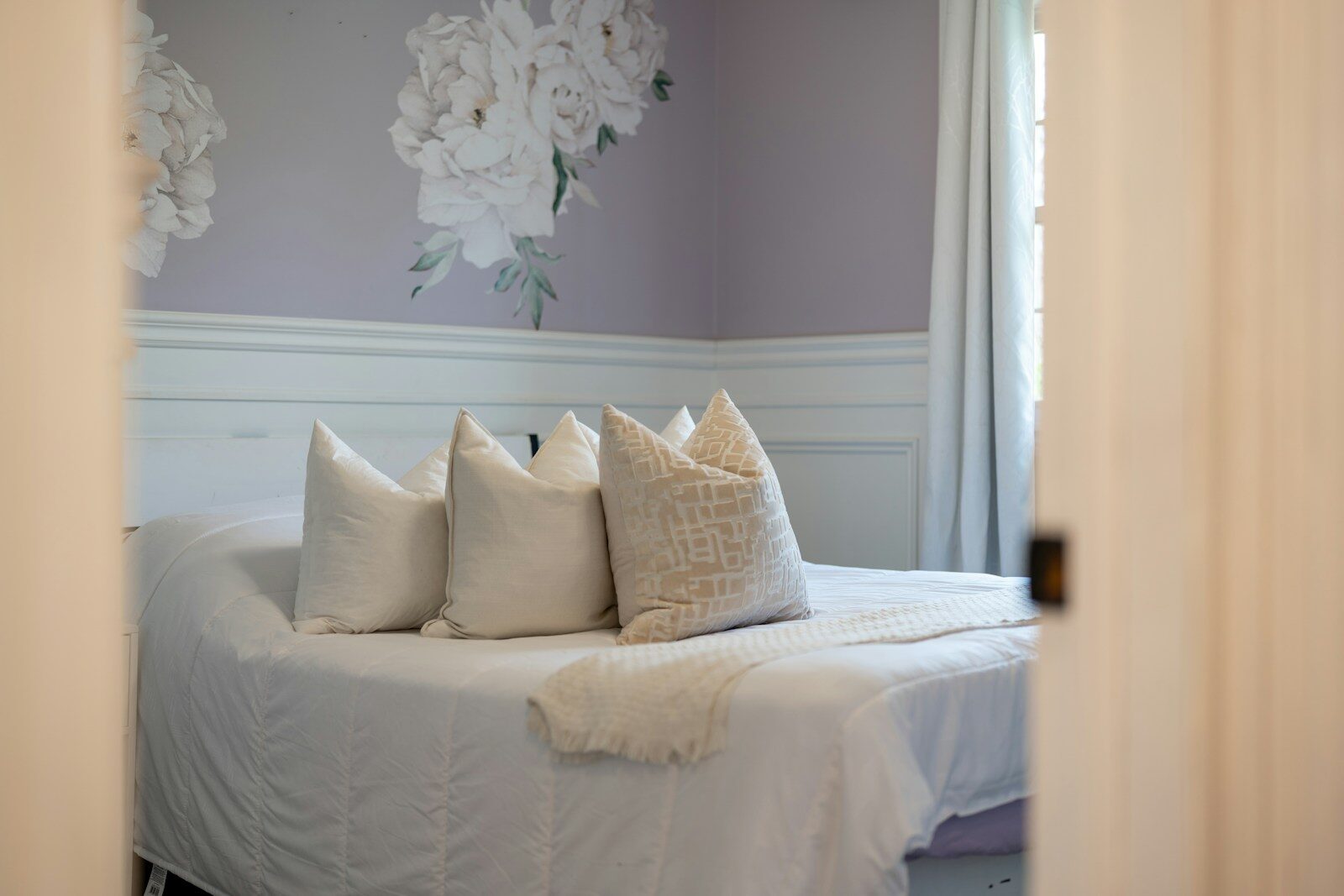
Because the bed is usually the largest piece of furniture in the room, it sets the feeling of the whole space. Layering is the secret to bedding that looks inviting and feels comfortable in different seasons. Start with a fitted sheet and a duvet or comforter you actually like sleeping under, then add a lighter blanket or throw at the foot of the bed for cooler nights. Pillows matter too: two sleeping pillows plus one or two softer decorative cushions are usually plenty. Choose natural, breathable fabrics where you can, such as cotton or linen, and wash bedding regularly so the bed always feels fresh when you climb into it.
Lighting that winds down
Bright overhead light is useful for cleaning and getting dressed, but it is not relaxing in the evening. Instead, rely on bedside lamps with warm-toned bulbs for the last hour or two before bed. A lamp on each side of the bed gives balanced light for reading and makes the room feel symmetrical and settled. If you can, put the main ceiling light on a dimmer, or simply switch it off in the evening and let the lamps do the work. Small touches, like a lamp with a fabric shade that softens the glow, make a surprising difference to how restful the room feels.
Clutter-free surfaces and storage
Clutter is one of the biggest enemies of a calm bedroom, partly because you see it first thing in the morning and last thing at night. Start with the nightstand: keep only what you genuinely use there, such as a lamp, a book, and a glass of water. Then work outward to the dresser and any chairs, which have a habit of becoming extra wardrobes. Closed storage helps enormously. Baskets, boxes, and drawers hide everyday items without making the room feel sterile, and a short daily reset, putting clothes away and clearing surfaces, keeps the calm from slipping away again.
Soft textures and natural materials
A calm bedroom should feel good to touch as well as to look at. Mix soft textures, such as a woven throw, a cotton bedspread, a wool rug beside the bed, and linen curtains that move gently in the breeze. Natural materials, like wood, rattan, and cotton, tend to feel warmer and less harsh than shiny plastics and metals. You do not need to replace everything at once. Swapping a cold, slippery bedspread for a textured cotton one, or adding a soft rug so your feet do not hit a cold floor in the morning, can change how the room feels every single day.
A relaxing bedside routine corner
It helps to give your wind-down routine a proper place. A small bedside setup, a book you are enjoying, a glass or bottle of water, and perhaps a small plant, turns the last minutes of the day into something you look forward to rather than an afterthought. Keep a phone charger nearby if you need it, but try to keep the nightstand from becoming a charging station for every device in the house. The idea is simple: when you sit down in bed, everything you need for a calm evening is within reach, and everything that demands your attention is somewhere else.
Art and scent, kept simple
Art and scent can make a bedroom feel personal and peaceful, but both work best in moderation. Choose one or two pieces of art you genuinely like, rather than filling every wall, and hang them where you can enjoy them from the bed. For scent, a single candle, a reed diffuser, or freshly laundered bedding is usually enough. Strong or competing scents can be distracting rather than relaxing, so keep it subtle. As with everything in a calm bedroom, the test is simple: does it help you relax, or does it just add another thing to notice?
What to avoid
A few common habits work against a restful bedroom. Bright overhead lighting late in the evening is one. Work clutter is another: a laptop, paperwork, or an overflowing inbox on the bedside table makes it hard for your brain to associate the room with rest. Too many patterns can also be a problem. One patterned element, such as floral wallpaper or a printed duvet cover, can be beautiful, but combining several bold patterns in one small room often feels busy. If the room feels restless, try removing one thing at a time until it settles.
A calm bedroom is not about a particular style or a large budget. It is about soft colors, comfortable bedding, gentle light, clear surfaces, and a few personal touches that help you unwind. Start with the change that would make the biggest difference for you, whether that is new bedding, a bedside lamp, or simply clearing the nightstand, and build from there. A calmer bedroom is a small change that pays off every night.