
A small space and a small budget can actually be a good combination. When every square foot counts, you are forced to choose carefully, and careful choices usually look better than filling a room just because you can. You do not need expensive furniture or a renovation to make a small room feel bigger, brighter, and more comfortable. These five ideas focus on the changes that give you the most impact for the least money, using pieces you can often find secondhand, move from room to room, or take with you when you move.
1. Mirrors and light
A well-placed mirror is one of the cheapest ways to make a small room feel larger. It reflects light, doubles the view, and creates a sense of depth that paint alone cannot. Hang a large mirror opposite or beside a window, rather than in a dark corner, and keep the frame simple so the reflection does the work. If a large mirror is out of budget, a group of smaller mirrors in matching frames can have a similar effect. Pair mirrors with light, airy curtains that let daylight in during the day, and add a warm lamp in the evening so the room never feels like a dark box.
2. Furniture that does two jobs
In a small space, every piece of furniture should earn its place, ideally twice over. A storage ottoman can be a seat, a footrest, and a place for blankets. A sofa bed or a daybed can turn a living room into a guest room when needed. A drop-leaf or extendable table works as a desk most days and a dining table when friends come over. A bench with storage underneath can hold shoes by the door. Before buying anything new, ask whether it can do at least two jobs, and whether you already own something that could. Secondhand shops and local buy-and-sell groups are often full of sturdy, multi-use pieces at a fraction of new prices.
3. Go vertical
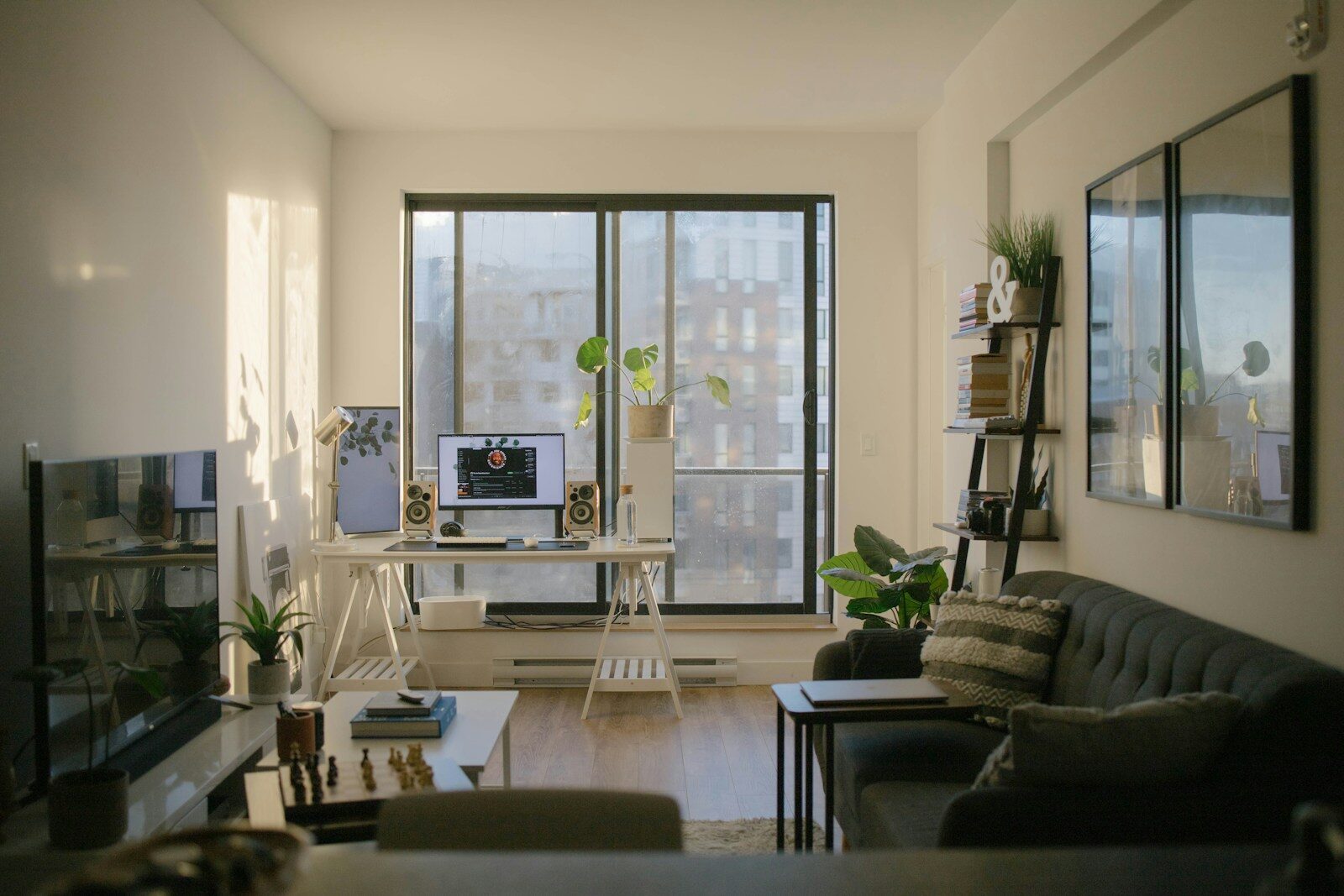
When floor space is limited, the walls are your best friend. Floating shelves above a desk or sofa, tall narrow bookcases, hooks on the back of doors, and a peg rail in the entryway all use space that would otherwise sit empty. Vertical storage also draws the eye upward, which makes a room feel taller. Keep it practical: put everyday items at arm’s reach and reserve the highest shelves for things you use less often. A simple rule helps avoid a cluttered look: leave some empty space on each shelf, and group similar items together in baskets or boxes rather than lining up every small object on display.
4. Rental-friendly swaps
If you rent, you can still make a space feel like your own without risking your deposit. Peel-and-stick wallpaper or tiles can transform a plain wall or a tired backsplash and can be removed later. Tension rods let you hang curtains without drilling, and no-drill adhesive hooks hold lighter frames, plants, and organizers. Removable art, such as prints hung with adhesive strips or leaning a large framed print against the wall, adds personality with no holes at all. Always check the weight limits on adhesive products, follow the removal instructions carefully, and test a small, hidden area first if you are unsure how a surface will react.
5. One statement piece, rest simple
It is tempting to fill a small room with lots of little decorative items, but that usually makes it feel smaller and busier. A calmer approach works better: choose one statement piece you really love, such as a bold rug, a colorful armchair, an interesting lamp, or a large piece of art, and keep everything else simple and neutral. The statement piece becomes the focal point, and the simpler surroundings make the room feel open and intentional. If you are not sure what your statement piece should be, look at what you already own and love, and build the room around that instead of buying something new.
A note on costs: prices for mirrors, shelves, hooks, and multi-use furniture vary widely by store, size, and region, so treat any price you see as a general range rather than a fixed figure. Many of these ideas cost very little if you shop secondhand, reuse what you already have, or tackle one small change at a time. Start with the idea that solves your biggest frustration, whether that is darkness, clutter, or a room that only does one job, and let the rest follow. Small spaces reward simple, thoughtful choices, and a room that works well usually ends up looking good too.